
NFL Half-Time Betting: Second-Half Lines and Live Market Strategy
 Available in US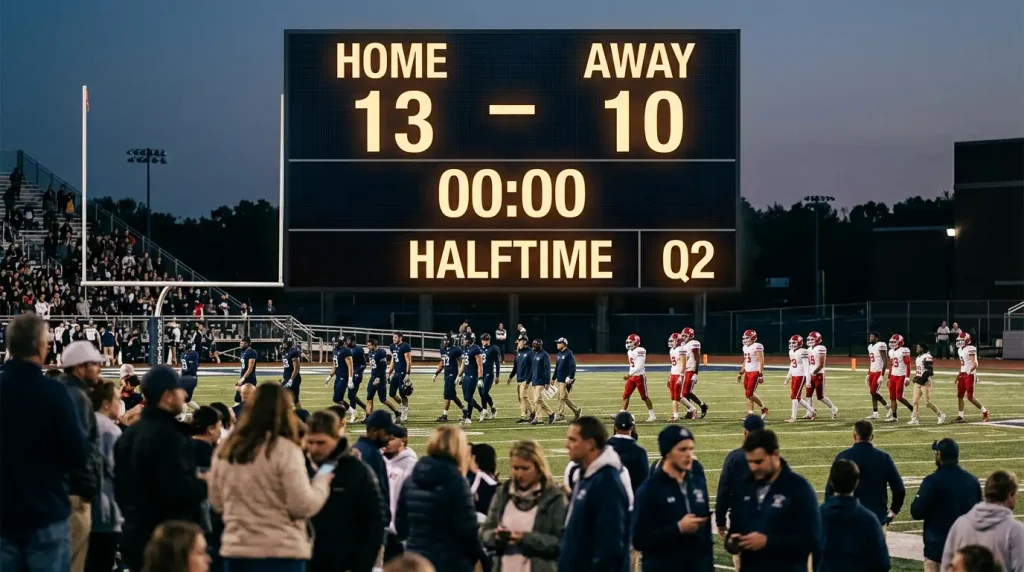
Halftime of a December game last season — the scoreboard read 21-3. The pre-game favourite was being routed. Most punters who had backed them pre-game had already written the bet off. I opened my app, looked at the second-half spread, and placed a bet on the trailing team. They outscored their opponent 24-10 in the second half and covered the second-half line by a comfortable margin. The full-game bet was dead, but the halftime bet paid handsomely. That moment captures the entire appeal of halftime betting: it gives you a second chance to analyse the same game with 30 minutes of additional data that the pre-game market did not have.
Halftime betting — also called second-half betting — involves placing wagers on the outcome of the second half only, with its own separate spread and total. The second-half line is posted during the halftime break (roughly 12 to 15 minutes at most UK bookmakers) and reflects both the pre-game expectations and the first-half result. It is a market that rewards quick analysis, pattern recognition, and an understanding of how NFL game scripts evolve between halves. For UK punters watching late into the night, halftime offers a natural decision point: evaluate what you have seen, assess the second-half line, and either engage or go to bed.
See also NFL popularity in the UK driving market growth.
Contents
How Second-Half Lines Are Set
The second-half spread is not simply half the pre-game spread. It is a new line generated by the bookmaker based on the current game state, adjusted for what happened in the first half. If the pre-game spread was Team A -6 and Team A leads 21-7 at halftime, the second-half spread might be Team A -1.5 rather than the -3 you might expect from halving the original number. The adjustment reflects the bookmaker’s assessment of how the score and game flow will influence second-half strategy.
Second-half totals follow a similar logic. A game that opened with a total of 44.5 and produced 28 first-half points might have a second-half total of 22.5 rather than the remaining 16.5 implied by subtracting the first half from the full-game total. That discrepancy exists because the bookmaker models second-half scoring independently, accounting for factors like halftime adjustments, pace changes, and the tendency of close games to tighten up defensively in the second half.
Understanding this pricing methodology is essential because it reveals where the bookmaker’s model may have blind spots. The model captures broad tendencies — trailing teams play more aggressively, leading teams protect leads, close games produce different scoring patterns than blowouts. What it captures less well is team-specific tendencies in second-half adjustment, coaching-staff quality in making halftime changes, and matchup-level nuances that the first half has revealed.
Second-Half Comebacks and the Trailing Team Advantage
NFL teams that trail at halftime win outright roughly 20 to 25 percent of the time, depending on the deficit. That sounds low, but the second-half spread already accounts for the deficit — the question is whether the trailing team’s second-half performance exceeds the market’s expectation, not whether they win the game. And on that question, trailing teams have a structural advantage that the market does not always price correctly.
A team that trails at halftime typically makes aggressive halftime adjustments. They pass more, go for it on fourth down more frequently, and take risks that a leading team would avoid. These strategic shifts increase both their scoring upside and their variance, but the net effect on expected scoring is positive — they produce more points per drive in the second half than they did in the first. The leading team, meanwhile, shifts toward conservative play-calling designed to protect the lead, which suppresses their scoring rate. The combination means the trailing team’s second-half margin is often better than the halftime score differential would suggest.
I have tracked second-half spread performance for trailing teams across three full seasons and the pattern is consistent: teams trailing by 7 to 14 points at halftime cover the second-half spread at a rate above 53 percent. Teams trailing by 15 or more are less reliable because the deficit often triggers garbage-time dynamics where the leading team’s reserves enter the game and the scoring becomes unpredictable. The sweet spot for halftime betting on the trailing side is a 7 to 14-point deficit, where the team is behind but not out, and the halftime adjustment phase is most impactful.
Coaching Quality and Halftime Adjustments
Not all coaching staffs make halftime adjustments equally well, and that variance is one of the richest veins of value in second-half betting. Some coaches are renowned for their ability to diagnose first-half problems and implement fixes at the break. Others are rigid, sticking with their pre-game plan regardless of what the first half revealed. The market’s second-half line does not differentiate between these coaching types — it uses a generic model that treats all halftime adjustments as roughly equal.
I maintain a rolling log of each coaching staff’s second-half performance relative to the first half. The metric I track is second-half point differential minus first-half point differential — essentially, how much does each team improve (or decline) between halves? Coaches who consistently show positive second-half swings are my preferred targets for halftime bets when their team is trailing. Coaches who consistently show negative swings — their team’s performance degrades after halftime — are teams I fade in the second-half market.
This data takes a few weeks to accumulate each season, so my halftime betting is lighter in September and heavier from October onward. By mid-season, I have enough data points to identify which coaching staffs are genuine second-half improvers and which are not. That edge is persistent because most bettors do not track halftime-specific coaching performance, and the bookmaker’s model does not incorporate it at a granular level.
See also nfl sport betting for the complete NFL betting guide.
Totals in the Second Half
Second-half totals behave differently from full-game totals, and the distinction matters. The first half of an NFL game tends to feature more scripted play-calling (planned opening drives, rehearsed early-down sequences), while the second half is more reactive (adjustments to the score, situational play-calling, clock management). The shift in play-calling style affects scoring patterns in predictable ways.
Close games (within 7 points at halftime) tend to produce tighter second halves with more conservative play on both sides. The under hits at an elevated rate in second-half totals when the halftime margin is narrow, because both coaching staffs are protecting against mistakes rather than pressing for big plays. Blowouts (14 or more points at halftime) produce higher-variance second halves because the trailing team throws aggressively while the leading team milks the clock. The total in blowout second halves depends heavily on whether the trailing team’s passing game is functional enough to sustain scoring drives against a defence playing with a lead.
Weather effects also compound in the second half. A game played in worsening conditions — wind picking up, rain intensifying, temperature dropping — will see a larger second-half scoring decline than the first half suggested. I factor real-time weather observations into my halftime total analysis, especially for outdoor stadiums where conditions can deteriorate during the game. A light rain at kickoff that becomes a downpour by halftime changes the second-half total equation in ways the pre-game line could not anticipate.
Practical Halftime Betting for UK Punters
The halftime window at UK bookmakers is narrow — typically 10 to 12 minutes of active betting before markets suspend for the second-half kickoff. That compressed window rewards preparation over reaction. You cannot run a full analysis during halftime; you need to have your framework ready before the break and apply it quickly when the second-half lines appear.
My halftime routine starts during the second quarter. By that point, I have seen enough of the game to form a view on which team is likely to make the better halftime adjustment. I note the first-half scoring pattern, identify any schematic mismatches that emerged, and check whether the coaching staff on either side is one I have flagged as a strong second-half adjuster. When halftime arrives and the second-half line is posted, I compare it to my pre-formed view. If the line confirms my analysis, I pass — the market agrees with me and there is no edge. If the line diverges from my view, I have a potential bet and the decision comes down to the size of the gap.
Stake sizing for halftime bets should be smaller than your standard pre-game wagers. The market is thinner (less liquidity, wider margins) and the decision window is compressed (increasing the risk of impulsive bets). I use half-unit stakes for halftime plays, which caps my exposure while still allowing me to capitalise on the edges that the second-half market provides. The global sports betting market is projected to reach roughly $88 billion in 2026, and the live and halftime segments are among the fastest-growing components. As more volume flows into these markets, the pricing will sharpen — but for now, second-half betting at UK bookmakers remains softer than the pre-game market and rewards the punters who bring a structured approach to the halftime break.
For a broader understanding of live betting mechanics that extend beyond halftime into real-time quarter-by-quarter wagering, the in-play strategy guide covers the full range of live NFL markets available at UK operators, including how to manage the unique psychological pressures of betting on a game in progress.
