
NFL Futures Betting: Season Wins, MVP and Super Bowl Markets
 Available in US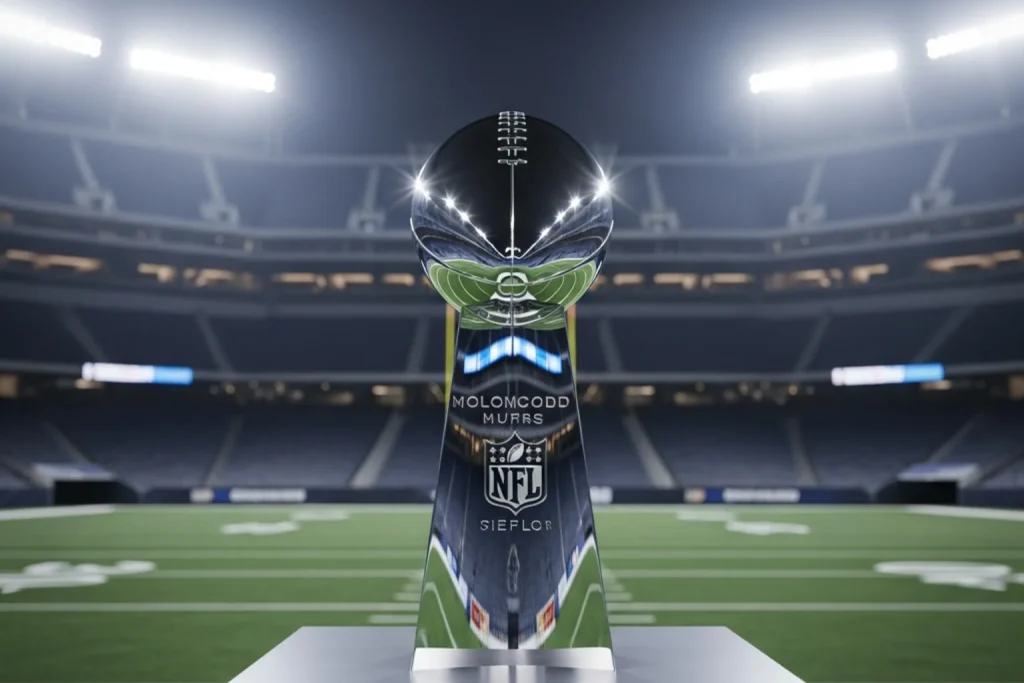
I placed my first NFL futures bet in July, three months before the season opened. The team I backed to win the Super Bowl was eliminated in the wildcard round. But a separate season-wins wager on a rebuilding franchise that everyone had written off? That one paid at 7/1 when they scraped past their total in Week 18. Futures betting is a patience game, and patience — not prediction accuracy — is what separates it from every other NFL market.
The Super Bowl LX handle alone was projected at a record $1.76 billion across legal US sportsbooks. UK bookmakers do not publish equivalent figures, but the growing appetite among British punters is obvious: every major UK operator now opens Super Bowl outright markets the moment the previous champion lifts the Lombardi Trophy. Futures lock your money up for weeks or months, which is why the odds are generous — and why the market rewards early movers who identify value before the crowd.
See also NFL Draft betting for pre-season futures.
Contents
Season Win Totals: The Quiet Money Maker
Forget the glamour of picking a Super Bowl winner. Season win totals are where I have made the most consistent futures profit over the past decade, and the reason is structural: the market is inefficient at pricing the middle of the pack.
Every NFL team is assigned an expected win total before the season — typically ranging from 4.5 to 12.5. You bet over or under. The bookmaker sets the line based on power ratings, roster changes, and schedule difficulty. What the line often misses is coaching turnover impact, second-year quarterback development curves, and strength-of-schedule flukes created by the NFL’s rotating divisional matchup formula.
A practical example: a team projected at 8.5 wins with a new offensive coordinator who installed a high-tempo scheme might see a two-win boost in a division full of slow, ageing defences. If the market has not moved from 8.5 by late August, the over carries genuine value. Conversely, a team at 10.5 wins with a brutal early-season schedule (three road games in the first four weeks, including a short-week Thursday) is a candidate for the under.
I evaluate season-win totals by building my own projection for each team and comparing it to the market. When my number sits a full win away from the line, I have a bet. When it is within half a win, I pass. That filter keeps me to eight or ten season-win plays per year — enough to build a portfolio, not so many that weak bets dilute the strong ones.
MVP Award Betting
The NFL MVP race is a quarterback award. I know it, you know it, the bookmakers know it. A non-quarterback has won exactly twice in the last twenty-plus years, and both were running backs who put up historically absurd seasons. If you are betting the MVP market, you are betting on which quarterback will have the best combination of team success and individual stats.
The edge in MVP betting is timing. Odds shift dramatically after the first four weeks of the season. A quarterback who opens at 20/1 and wins his first four games by throwing twelve touchdowns to one interception will compress to 5/1 overnight. If you identified that upside before Week 1, you captured four times the value. My approach is to take two or three pre-season MVP positions at long odds and treat them as lottery tickets with an analytical basis. I look for quarterbacks on teams likely to win ten or more games, with strong offensive lines and upgraded receiving options.
One trap to avoid: narrative bias. The media loves a comeback story. A quarterback returning from injury often gets disproportionate MVP buzz in pre-season, which compresses his odds beyond fair value. I fade those narratives and focus on the underlying matchup and schedule data instead.
See also nfl sport betting for the complete NFL betting guide.
Super Bowl Outright: The Flagship Futures Market
AGA chief Bill Miller described the Super Bowl as an event where no other single occasion brings fans together in quite the same way — and the betting handle reflects that. The outright Super Bowl winner market is the most liquid futures market in NFL betting, which means the odds are sharper than season-wins or MVP markets. Finding value here is harder, but not impossible.
The best time to back a Super Bowl contender is during the off-season, immediately after free agency and the draft. Roster composition is known, but the market has not yet priced in the full impact of additions and departures. A team that lands a top-tier pass rusher in free agency and then drafts a starting-calibre cornerback might see its Super Bowl odds shorten by 30 percent between April and September. If you move in March, you capture that compression as profit.
I allocate a fixed portion of my annual betting bankroll — usually five percent — to Super Bowl outright positions. I split it across two or three teams at different price points: one genuine contender at 8/1 to 12/1, one dark horse at 25/1 to 40/1, and occasionally a long shot at 60/1 or higher if I see a credible path. The key is accepting that most of these bets lose. The portfolio approach means the winners need to cover the losers with room to spare, and at futures odds, a single hit often does exactly that.
Timing Futures: When to Place and When to Wait
Futures are the one NFL market where timing is more important than selection. Back the right team at the wrong time and your edge evaporates. Back a decent team at the perfect time and you print money.
The calendar breaks into four key windows. The first is the post-draft period in late April and early May. Roster construction is settled, training camp has not started, and the market relies on projections rather than performance. This window offers the widest range of odds and the most value for contrarian positions.
The second window is the pre-season injury period, roughly late August. A key injury to a starter on a contending team crashes their odds outward. If you believe the backup is competent or the roster is deep enough to absorb the loss, that crash creates buying opportunities.
The third window is mid-season, around Weeks 8 to 10. By this point, roughly half the league is effectively eliminated from contention, and public money piles onto the remaining favourites. But the teams sitting at 5-4 or 6-3 with an easy remaining schedule are often mispriced — the market discounts them because they lack the media profile of the established powers.
The fourth window is the wildcard round of the playoffs. The Super Bowl odds market re-prices aggressively after each playoff game. A lower-seeded team that wins in the wildcard round often still carries inflated odds heading into the divisional round, because the market adjusts slowly to the reality that they are now just three wins from the title. I have hit my best Super Bowl futures by buying playoff underdogs after their first win, not before.
Patience and position sizing — not predictive genius — are what make futures profitable. Treat every futures bet as a long-term investment, size it accordingly, and let the calendar do the work.
